
Table of Contents
2022
Grape plants
My very first gardening effort was transplanting the grape plants I had rooted in Snoqualmie. The slow growth of these normally vigorous plants was disconcerting - grape plants aren't generally sensitive to the quality of the soil. Eventually by mid-July the first buds appeared.
Adding native plants
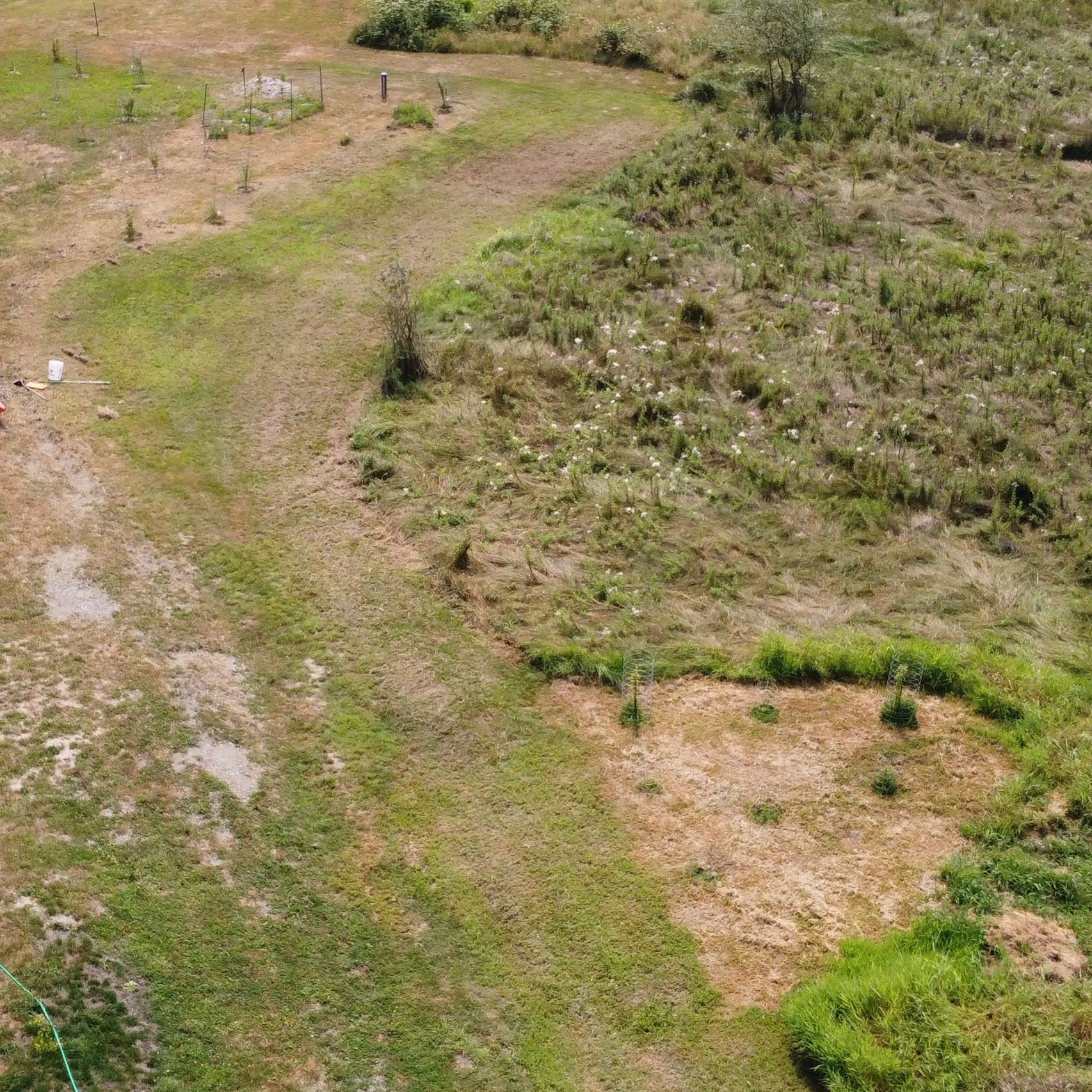 During our first year on our property I purchased bare-root, native plants from an annual sale from Pierce Conservation District.
I intended to populate the wetland buffer on the southeast corner with well-adapted plants that would grow well, eventually provide shade over the grasses and attract pollinators, and, hopefully, seasonal color from flowers. The area was heavily overgrown with reed canary grass, an invasive plants common near wetlands.
These plants included, nootka rose, blue elderberry, Pacific ninebark, red flowering currant, red-osier dogwood, oceanspray, red-stem ceanothus, pacific willow and western serviceberry.
With careful watering throughout the following summer, 30 of the original 45 plants survived - some simply disappeared. This is typical of planting bare-root plants. I saw only one flower from a nootka rose during the first season.
2023
Flowers
worked on flower beds next to the house
First vegetable plants
While we were still living in the trailer we attempted to grow tomatoes and pole beans in the native soil. The results were disappointing, as in entirely unsatisfactory. Cooler nights early summer didn't provide enough heat to satisfy tomatoes, but they appeared to be stunted by the soil. Likewise, the pole beans grew poorly and didn't bear typical beans.
Soil testing
Invasive and toxic grasses populated the entire 5 acres (reed canary grass and creeping sedge rush). The first clue was that the soil smelled septic - not like a barnyard, but putrid. The soil was as unsuitable for planting as it was unattractive. The grass had extensive networks of rhizomes, (thick growth-generating organs). The entire eastern area had been used for parking (for a sky-diving club across the street) and the soil was filled with rocks of all kinds, from fractured to glacial rocks, making it very difficult to dig holes for the transplants.
And when the soil got wet it became mucky - thick and sticky.
A soil test and later attempts confirmed this - all essential minerals were low and the electro-chemical balance poor. The soil was “played out.” The soil was too poor for growing vegetables without major amendment.
We grew flowers in containers using commercial potting soil, but growing in the native soil would require major soil amendments even in flower beds next to the house.