
This is an old revision of the document!
Table of Contents
2024
Everything is new: New location, different growing season, different soil!
Native soil
 Early views of the 5 acres of grasses ranging from wetland to buffer varieties appeared to be amenable to finding a relatively small garden plot for vegetables, though we imagined some challenges.
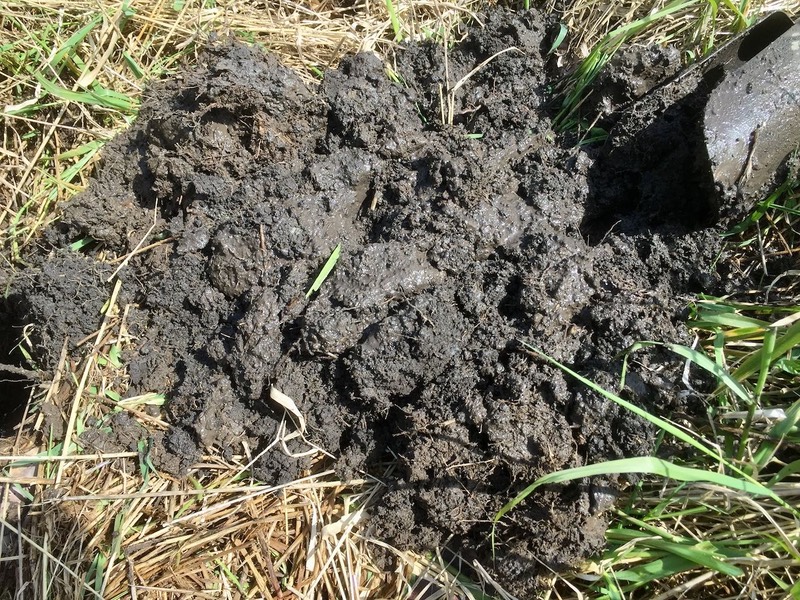
While we were still living in the trailer we attempted to grow tomatoes and pole beans in the native soil. The results were disappointing - early summer didn't provide enough heat to satisfy tomatoes and both grew poorly. One conclusion was that the soil was too poor for growing vegetables.
Early views of the 5 acres of grasses ranging from wetland to buffer varieties appeared to be amenable to finding a relatively small garden plot for vegetables, though we imagined some challenges.
While we were still living in the trailer we attempted to grow tomatoes and pole beans in the native soil. The results were disappointing - early summer didn't provide enough heat to satisfy tomatoes and both grew poorly. One conclusion was that the soil was too poor for growing vegetables.
A soil test and later attempts confirmed this. We were able to grow flowers in containers, but growing in the native soil required major soil amendments even in flower beds next to the house.
Native plants
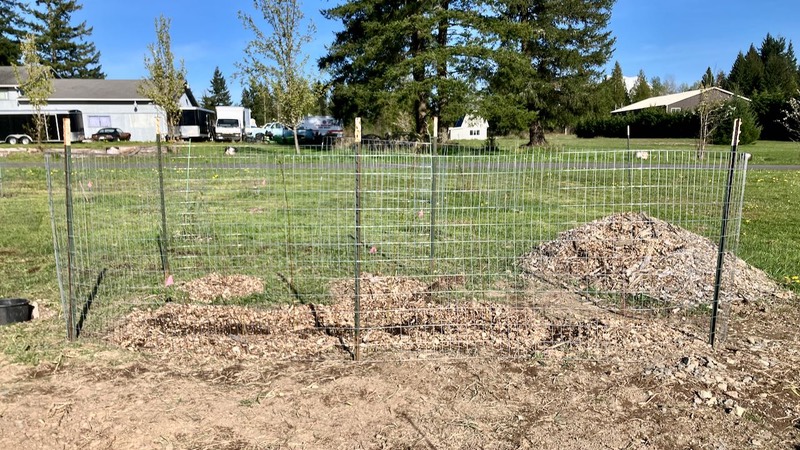 We added to the native plants brought in in 2022, additional Blue elderberry, (none of the original survived), Red flowering currant, and red-osier dogwood. The tastes of deer and elk dictated that we put a wire cage around each transplanting is we wanted it to survive.
Later in the year we ordered several plants from a commercial nursery, Burnt Ridge Nursery.
Raised bed gardening
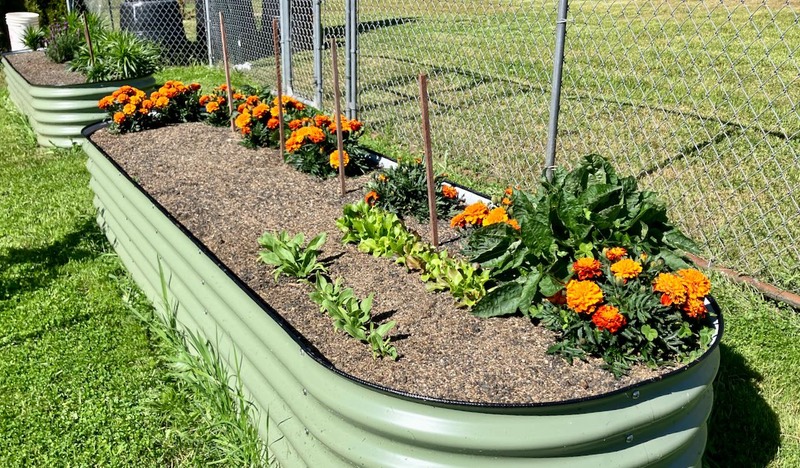
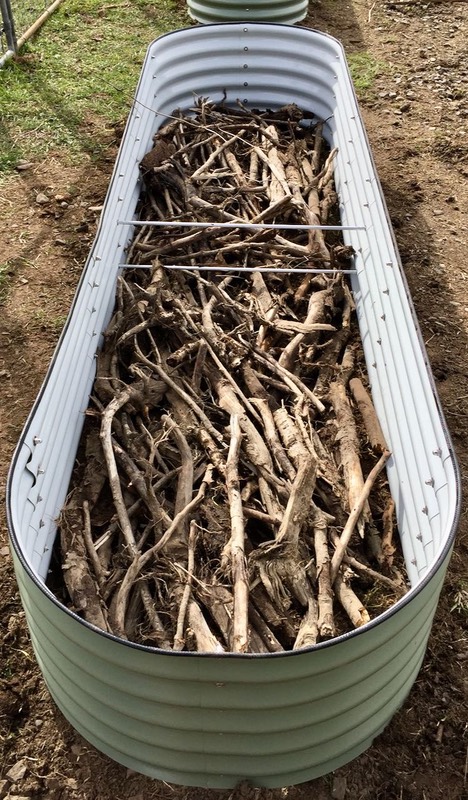 Supported by his initial experience we decided to grow in raised beds with imported soil. We built a Hugelkultur base (wood and organic material) covered with a local product from municipal waste from the City of Tacoma called Tagro, said to be safe and perfect or growing vegetables, and flowers, too.
We had an abundance of marigold plants and flower bulbs (dahlia and liatris) and space in the two beds was used up quickly. So we brought in a third bed for vegetables. Our first serious planting included summer squash, carrots, bush beans, beets, lettuce and spinach. Daughter Bevin donated raspberry canes, which found a place between the raised beds. As these grew the necessity of a trellis was obvious. Quite ambitious in our first gardening experiences here, we transplanted into containers that Maura managed on the back deck (tomato, pepper and herbs). We discovered the Early Girl variety of tomato and were very pleased with the vigor and the fruit. More of these next season.
Fence around garden/orchard
 Deer and elk are year-round visitors, especially to anything green that they consider tasty. This includes leaves of grape vines, flowers and vegetables. So when we began our gardening we brought over the chain-link panels from where we had the travel trailer. This wasn't long enough to enclose the garden so we extended it with panels from an available dog pen.
While this extended fence was adequate at the time, we planned to add fruit trees nearby, and we kned how much elk liked tree fruit.
We got bids from fencing contractors about a permanent deer fence and found we couldn't manage the expense. So we bought more chain-link panels and piece by piece, week by week we extended around the future orchard.
To allow access to a riding lawn mower or our tractor we bought a deer gate (7 feet tall), erected a strong post and installed it.
Deer and elk are year-round visitors, especially to anything green that they consider tasty. This includes leaves of grape vines, flowers and vegetables. So when we began our gardening we brought over the chain-link panels from where we had the travel trailer. This wasn't long enough to enclose the garden so we extended it with panels from an available dog pen.
While this extended fence was adequate at the time, we planned to add fruit trees nearby, and we kned how much elk liked tree fruit.
We got bids from fencing contractors about a permanent deer fence and found we couldn't manage the expense. So we bought more chain-link panels and piece by piece, week by week we extended around the future orchard.
To allow access to a riding lawn mower or our tractor we bought a deer gate (7 feet tall), erected a strong post and installed it.
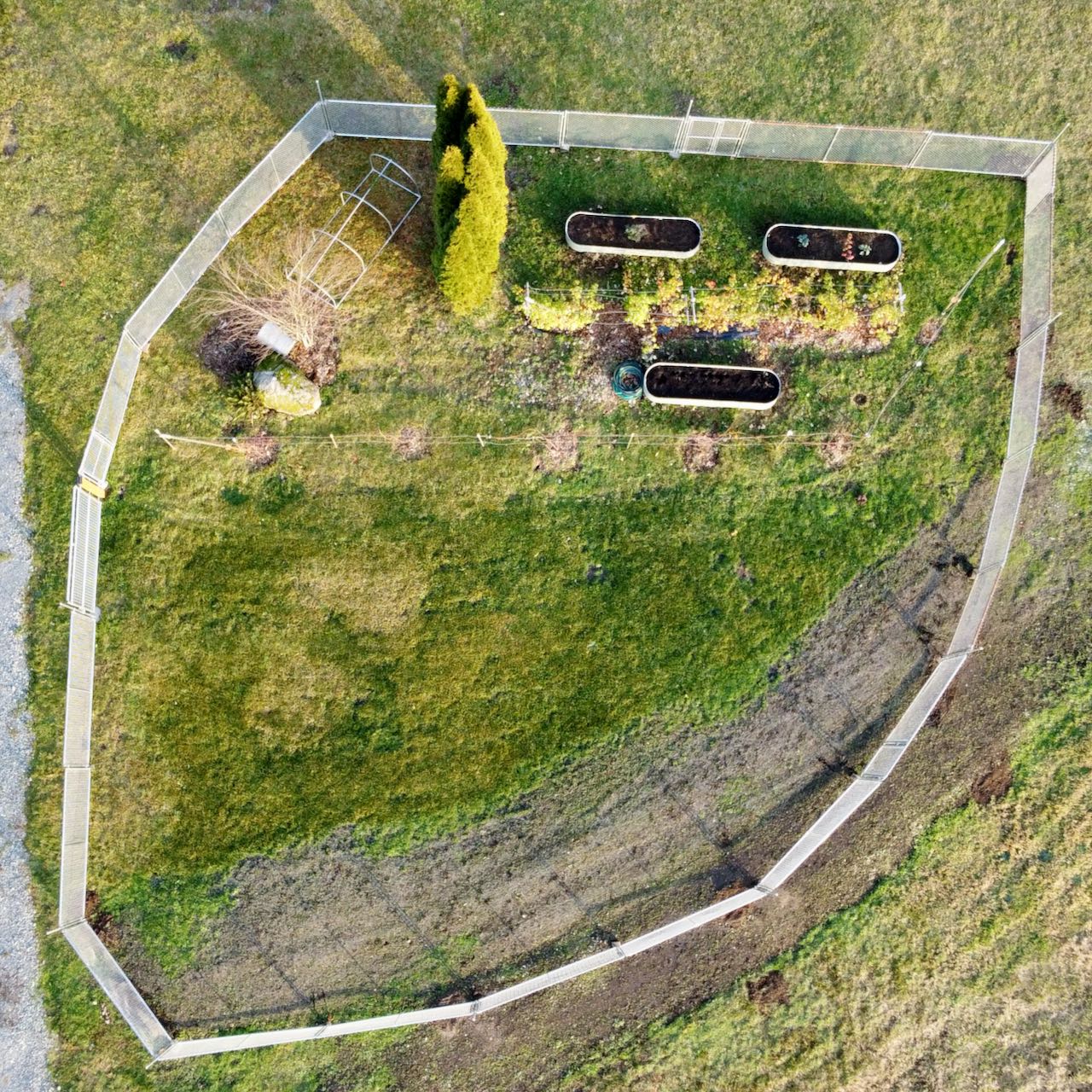 Our design included a metal post mounted in concrete between every pair of panels, to keep them in line, and protect them from the strong winds we have. We imagine that we can string an obvious tape from one tall post to the next and make the height appear “too tall” for would-be poachers.
Fruit trees
We will be adding six fruit trees to the open space within the fence when they arrive in April 2025:
- Reliance peach
- Nijisseiki Asian pear
- Stanley plum
- Glacier cherry
- Akane apple
- Cosmic crisp® apple
View a gallery of all 2024 photos: